Financial Freedom, Explained: What the Number Actually Means for You
By Caleb & Mary Beth Lutz · August 4, 2026 · pairs with Episode 7: Financial Freedom, Explained: What the Number Actually Means for You
Financial freedom is not a mansion. Financial freedom is a number, and once you know yours, everything in your life can start to shift.
This is a written companion to our video on what financial freedom actually means. The full episode is below. If you'd rather read, here's what we cover: what financial freedom really is, your escape number, and the gap to get there and how to close it.
We come at this from experience on both sides of it. Both of our journeys started on the financial-lack and illiteracy side as young adults, but we've worked our way to financial stability, financial peace, financial flexibility, and toward financial freedom since. So this isn't theory from a spreadsheet. It's the progression we came to understand it.
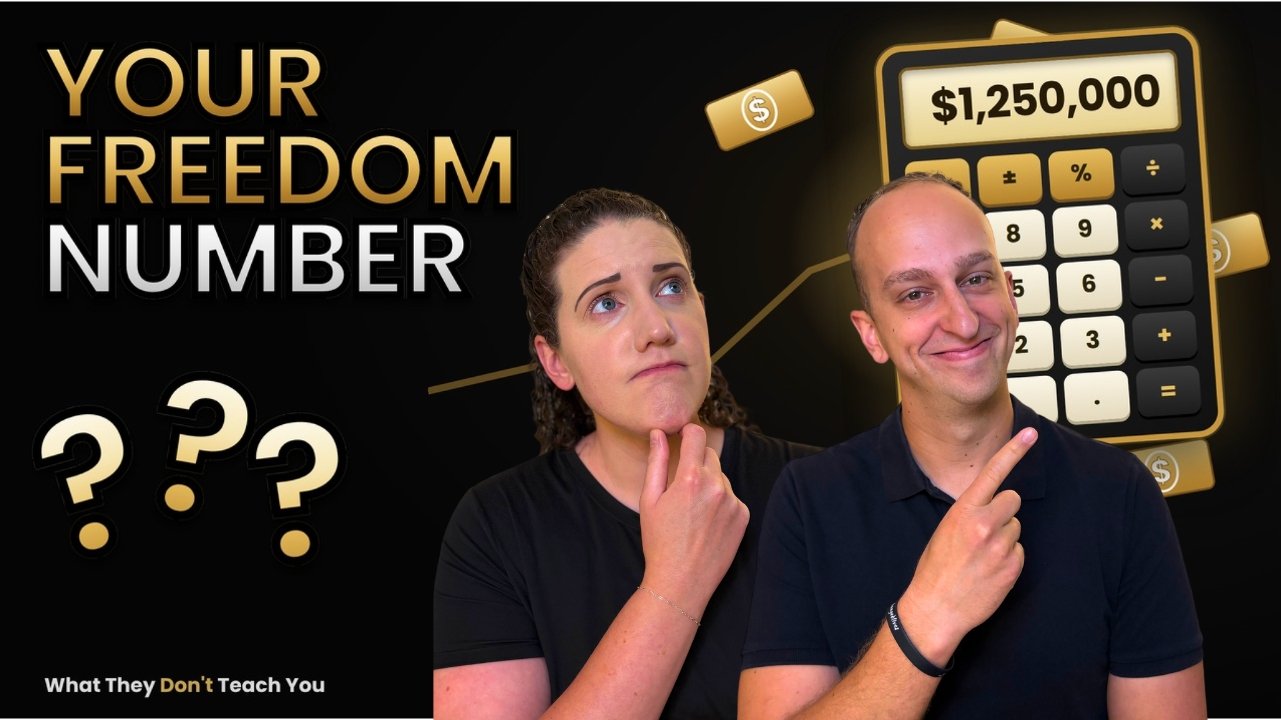
What financial freedom actually means
Before you define what something is, it helps to look at what leads up to it. And for most people, including us, that starts with financial lack.
Caleb shared that he grew up lower-middle class, and then when the family farm was lost, in poverty, not knowing when the next paycheck was coming or whether there would be enough. Even after graduating with a teaching degree, the rude awakening was the same one so many people hit: how is there this much more to pay for than anyone prepped me for, who is Uncle Sam, and where is my money actually going?
That question is the hinge. The move from financial lack to financial stability starts with knowing where your money goes. It's less exciting than "just make more income," but you can't make good changes until you can see the whole picture. You have to get a budget together, put pen to paper or digits to a screen, and map what's coming in and what's going out.
Budgeting is about peace of mind, not numbers
A fair question we get: do you have to be a numbers person to budget? Not at all. And while it does require you to look at numbers for a few minutes, it's not really about the numbers. It's about the peace of mind.
Mary Beth shared that when she wasn't making much, there was real anxiety in even checking her bank account, a quiet fear of what she'd find. The irony is that budgeting is what got her out of that hole. Facing it, doing what we teach everyone now, going back through three months of statements, highlighting categories like groceries, gas, and car insurance, separating the fixed monthly costs from the variable ones, turned the fear into a known quantity she could work with.
That's the whole point. Budgeting tells you your standard basics, the things that come out every month, while leaving room to decide: do I want to save a little, invest a little, or after a good month just go grab a pizza and have some fun? You don't have to be the person with the unremovable glasses and pocket protector.
In terms of practicals to start your budget, there are plenty of apps that can help you budget simply. We built a free resource called the Freedom Budget Tracker to not just identify income and expenses, but what types of expenses and incomes and to identify your freedom number. If you're carrying debt, getting a payoff plan in place is a big part of moving from lack to what some people call financial peace (shout out to Dave Ramsey and his material on that).
The progression: lack, stability, peace, flexibility, freedom
We think of financial freedom less as a destination and more as a journey, because there's a real progression to it.
There's often a strict-budget season at the start of choosing to move from financial lack to stability. We each had one before we ever met. Caleb shared that eight or nine years ago he had a $20-a-month budget for eating out, living on spaghetti, chicken, rice, and hamburger, no sauces, while working four jobs/gigs to pay off debt. That kind of head-down grunt work on the front end is sometimes exactly what it takes to climb out of financial lack, bolster your income, and develop new habits.
Past stability (when you’re intentionally earning more than you’re spending while paying off debt), comes financial peace or debt freedom. It can be incredibly rewarding because so few choose to live off of the means they’ve already built, but can also be thought of maturely as starting from ground zero. You live off of what you’ve already built and currently earning.
Financial flexibility is next, where you’re debt free and widening the gap between income and expenses, intentionally investing a large majority of the gap money into future freedom, but also opening up some options for flexibility/lifestyle. It's being able to relax through a slower month at the full-time job, because there's income coming in elsewhere. Or, on the flip side, being able to have the real conversation with a client who's driving you crazy after hours, and move on if you're not a good fit, because the income isn't all riding on that one relationship. It's not full financial freedom yet. It's flexibility, and what it does to your sense of worth and your day-to-day is genuinely powerful.
Watch Episode 7 live to hear where we assess we are in our journey now.
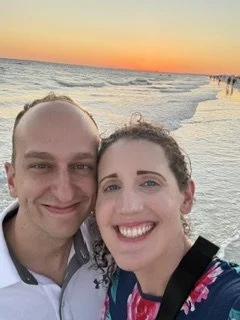
Caleb and Mary Beth Lutz
Your escape number
That brings us to point two: your escape number into financial freedom.
The logic is simple. Your escape number is your total monthly essential expenses. Housing or rent, essential food, your car if you truly need it, your phone, the basics you have to cover no matter what you do. The Freedom Budget Tracker walks you through calculating yours step-by-step, but the honest work is taking a hard look at the extras, the trips, the subscriptions, the entertainment, and asking what you're willing to trim for a season. Those are lifestyle options you'll have again one day. The question is where you can cut the fat now.
Here's the encouraging part. Knowing the number isn't about reaching a point where you can never have any extras. It's about reaching the point where you have your choices back. And even before you fully replace that number, even when you're halfway there and can see how different things will be, your conversations change. Your work level, your skill level, all of it starts to upgrade, because you can finally see the target.
The gap, and how to close it
So you’ve taken the time, used the Freedom Budget Tracker, and now know your Escape number. How do you close the gap to reach it?
Part of it is trimming, and we've done that. There's an app that will surface every subscription you're paying for. We watched someone run it and find around 20 subscriptions, only $10 to $15 each, but they were genuinely shocked at the total and didn't even realize their card was being charged that much. They could cancel all of them and hand themselves $200 to $300 a month back, or pick and choose. The point isn't the specific app. It's again getting the choice back in front of you.
But cutting only takes you so far. The better way to close the gap is expanding your income circle, creating more pools to draw from instead of depending on one. We did this in our own careers. We both started as teachers below the poverty line, both moved into corporate training (an almost identical path we didn't discover until after we met, which was hilarious), then into sales and business ownership. Along the way we expanded our active income and, just as importantly, developed ourselves into people who are genuinely valuable to the places we work.
We'll have future posts breaking down the real pros and cons of different income streams, from coaching to content to marketing to sales. For now, a few resources already on the site can help: the Income Stream Starter Guide, a 90-Day Activation Plan, and a Skills-to-Income tool that helps you look at what you're already good at and how you might start getting paid for it. The more skills you develop, the more you can earn for the same or less time, and eventually the more you can invest so your money starts working for you.
Don't discount small beginnings
One last thing, because it mattered enormously for us.
Mary Beth shared that while she was living below the poverty line as a teacher, her financially savvy accountant dad asked whether she had even $25 or $50 a month to put into a long-term investment account. At the time it felt pointless, $25 wasn't going to change anything. But that was 15 years ago. Multiplied across all those months, plus the larger contributions since, that small, consistent start became genuinely significant.
Wealth building is a habit with time compounding as your closest friend. That's the piece so many of us never learned. The wealthy often think about money very differently, and from the outside it can look like a mystery, when it's really a set of simple principles applied consistently. How do you eat an elephant? One bite at a time.
So if your financial picture feels overwhelming, take the first step. For a lot of people that's putting pen to paper on a budget, or finally looking at the bank account. That can be the scariest part, especially if the only time money came up growing up was in a fight. But once you truly see what you have and start stewarding it well, the sky is the limit.
The takeaway
Financial freedom isn't a mansion and it isn't one universal number off someone's feed. It's your number, built from your current life scenario, reached through a progression: lack, stability, peace, flexibility, and eventually freedom.
Three things to hold onto: know what financial freedom actually means for you, find your escape number, and close the gap, mostly by expanding your income circle. If you want the tool we built for the first two, the Freedom Budget Tracker is free on the resources page. We put real work into it and we'd genuinely like your feedback after crunching your numbers, so give it a run and see if it helps.
And remember, you always have a choice to change your life… if you choose it. We believe in you.
🎯 Start here: theydontteachyou.com/start-here
📩 Get the free Freedom Budget Tracker and browse every resource: theydontteachyou.com/resources
