By Caleb & Mary Beth Lutz · July 25, 2026 · pairs with Start Here: Episode 4 - Before You Chase Income, Do This First. The full video is below if you'd rather watch. If you want the ideas quickly and in writing, here's what we walk through and why we call it out as maybe the most important episode of the Start Here series.
The premise: most people rush to make more money before they know what they can actually take on. So they chase random hustles, burn out, and quit. The video lays out three steps to take first, so yoBur effort is aimed somewhere it can pay off. These three can feel like the most glossed-over and boring part of the journey, we show they're THE most important thing you can do before chasing a new income stream IF you want a new destination vs traveling in another circle.

Step 1: Know how much time you actually have
The first step in the video is to figure out what you can genuinely give before piling anything new onto your plate. Every situation is different. A parent of four and a single person with no dependents have very different amounts to work with. There's no universal answer, only yours.
Our suggestion is to track a normal week and watch where the hours actually go, honestly, for seven days. Most people have more room than they think. We all say we're slammed, and then the scroll time adds up to a surprising number.
The 24-hour map
The exercise we recommend is low-tech. Print a blank sheet from midnight to midnight and map the real day. Shade in sleep. Down at ten, up at six, that's eight hours. Block an hour each for breakfast, lunch, and dinner, and give work its eight. That's around nineteen hours accounted for, which still leaves five to seven.
The episode pushes back on the myth that building something means every waking minute has to be productive. Far more likely, what you need is one to two focused hours a day, or a couple of dedicated blocks a week, pointed at your future. You can build and still have a real life. But if you don't know where your hours go, all you can honestly say is that you're busy.
Success won't cost us what actually matters. It will come for the habits we defend but know we need to drop.
Treat time like a budget
The video frames time budgeting exactly like money budgeting. Fixed amount coming in, some of it spoken for, the rest allocated on purpose. Done well, it calms you down rather than stressing you out, because you trade a vague sense of chaos for an accurate picture of your week. Once you have that, you can pick growth plans and income streams that fit the time you really have, which is what the Income Streams Index on our Resources page is built to help you weigh.

Step 2: Know your numbers
Budgeting might be the single most avoided task in adult life, and the episode spends time on why. Caleb grew up in a lower-income house where money mostly came up in stress, almost always in a fight. When that's your association, you avoid the whole topic.
What a budget actually does is let you deal with money from a place of rest instead of dread. But you have to be willing to look at where you are right now. Everyone we have worked with on income or coaching, we intentionally start here, because until you know where you stand, everything after it is a guess. Most people are surprised by their own spending, and many realize that with a little intention in a couple of places, plus a bit more coming in, they'd already be closer to the number they're chasing.
The relief is on the other side of looking
The counterintuitive point in the video: most people assume the anxiety comes from looking at the account, when it usually comes from not looking. Nearly everyone we have watched actually pull three months of statements and get a real read on their spending felt relief afterward, even when the news was bad, because now it's a known thing we can plan against instead of a shapeless weight on your chest.
Sometimes it goes the other way entirely. We’ve seen people spending hundreds a month on gas-station and fast food stops without a clue, or paying for forgotten subscriptions from years back. That's real money that could go to debt, savings, or the income streams you're working to build. The Freedom Budget Tracker is our tool highlighted, though any thorough budgeting method is better than guessing. The point is to get honest about what's coming in and going out, then widen that gap until your income clears your output by enough to start having your money work for you.
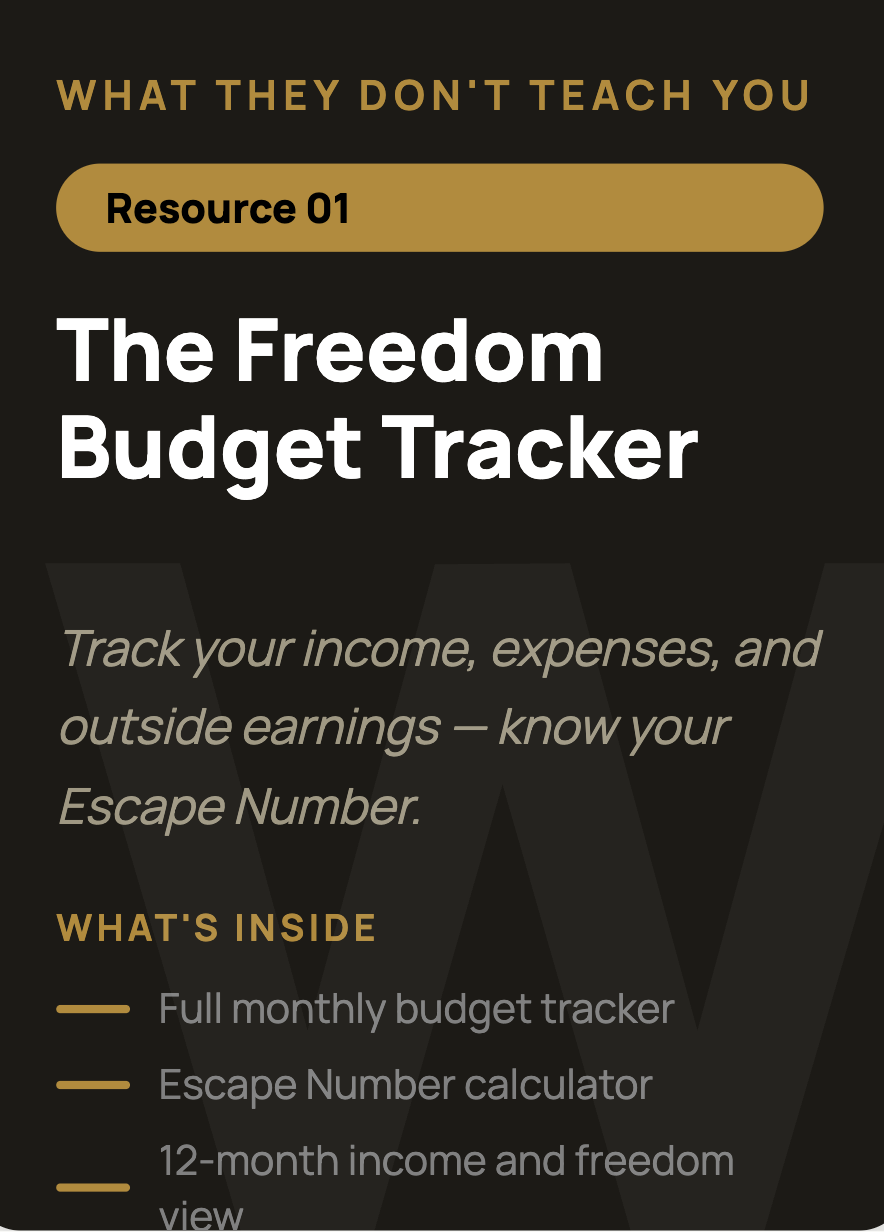
Find the Freedom Budget Tracker on our Resources page
Step 3: Take inventory of your strengths
The third step is the fun one: an honest read on what you're actually good at. We reference CliftonStrengths from Gallup, formerly StrengthsFinder, as one structured way to get an answer.
Mary Beth shares her top five came back with strategic, communication, and woo near the top, which explained why some paths felt effortless for her and others would've been misery. Ask her to build giant accounting spreadsheets and sell them online and it's the worst idea in the world. Content, video, and education is how she's wired, so that direction had traction right away.
Most people already have things they're good at that others will pay for: sales, teaching, writing, organizing, fixing things, or connecting people to each other. The Skills to Income Translator is built to map what you're already good at to the ways it can convert. As always, we want to emphasize that most of these paths take significant, consistent effort to become reliable income streams. The point isn't a shortcut. It's starting from a strength so the effort is aimed somewhere it can pay off longer that a hustle.
Comparison is not a good reason to skip this
We close the section by naming the trap: scrolling, seeing everyone appear miles ahead, and quietly deciding it's not worth starting. That comparison spiral is common and it's not a good guide. Everyone has things built into them that nobody else has, and nobody else has your exact story. Caleb spent years reading his own background of "homeschooled, introverted, bad with money" as disqualifications, when those are the very things that let him speak to people living in that right now.
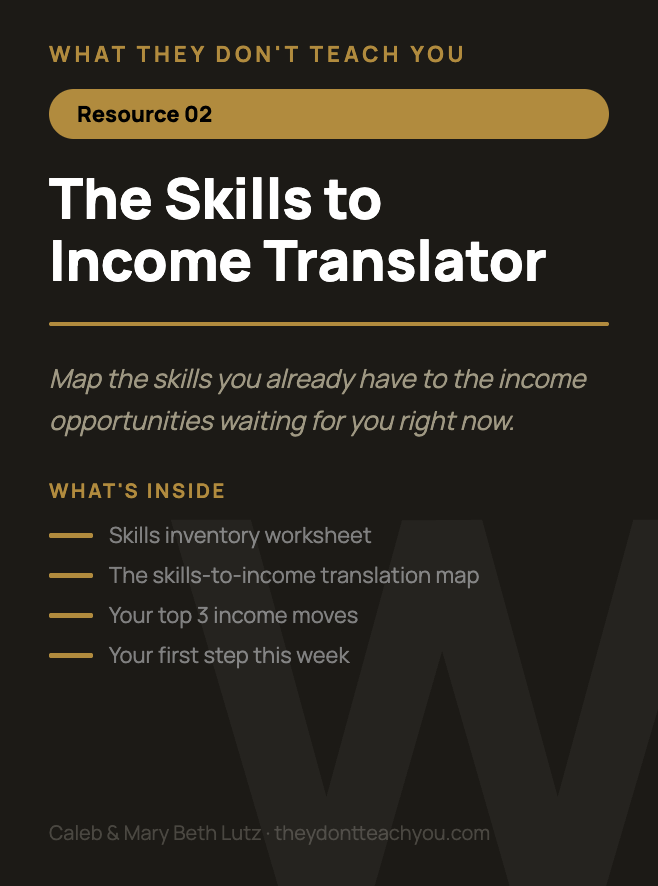
Find the Skills to Income Translator on our Resources page
The takeaway
It’s WORTH the investment of time to get three honest reads before you chase income: where your time goes, what your numbers are, and what your strengths actually are. Do that and your next move comes from knowing instead of guessing, which is the difference between a decision that lasts and one that fizzles in weeks.
The Freedom Budget Tracker and the Skills to Income Translator on Resources are built for exactly these budgeting steps.
You always have a choice to change your life.
🎯 Start here: theydontteachyou.com/start-here
📩 Get the free Freedom Budget Tracker and Skills to Income Translator: theydontteachyou.com/resources
